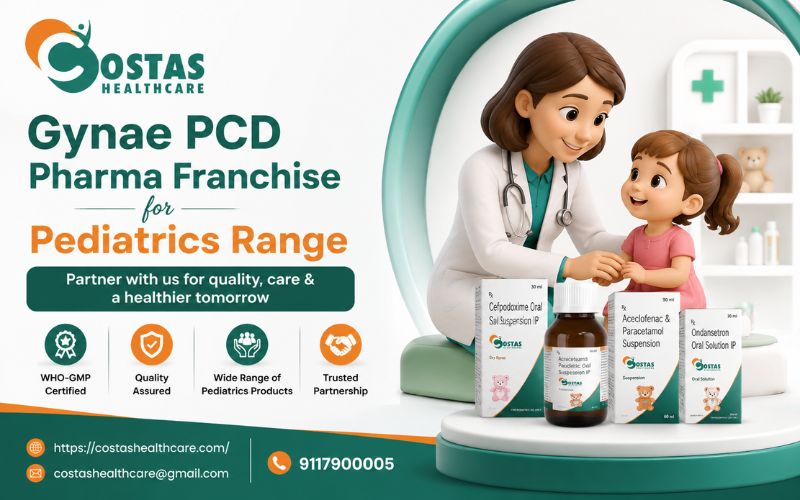
The healthcare landscape in India is undergoing a profound structural evolution where specialization is key to commercial success. Within the pharmaceutical sector, two therapeutic segments are intrinsically and clinically linked: gynaecology and pediatrics. For pharmaceutical distributors, stockists, and entrepreneurs looking to maximize their returns, investing in a Gynae PCD pharma franchise for Pediatrics Range offers an extraordinary B2B synergy. By combining maternal care with neonatal and child healthcare, franchise partners can offer a comprehensive “Mother and Child” portfolio. This dual-focus strategy significantly increases market share, optimizes distribution networks, and creates a highly stable, recurring revenue stream.
The clinical logic behind this integration is simple yet powerful. A woman’s relationship with her obstetrician and gynaecologist begins before conception and continues through pregnancy and childbirth. Immediately after delivery, the primary focus shifts to the pediatrician or neonatologist. For a pharma franchise, bridging this transition with a high-quality product portfolio means that the same distribution channel can serve both clinics, maternity hospitals, and nursing homes. Rather than operating in a single, isolated therapeutic area, a hybrid Gynae-Pediatric franchise allows you to maximize your marketing efficiency and establish a powerful, multi-specialty presence in your territory.
Market Dynamics: The Commercially Lucrative “Mother & Child” Pharma Model
To build a sustainable pharmaceutical business, it is essential to evaluate the underlying market forces driving demand. The pediatric pharmaceutical market in India is expanding at an annual growth rate of over $11\%$, fueled by factors such as rising disposable incomes, expanding healthcare infrastructure in semi-urban areas, and heightened parental awareness regarding child wellness.
Investing in a pediatric range alongside your gynaecology portfolio yields several distinct business advantages:
1. The Integrated Healthcare Channel (Single-Point Sourcing)
Most modern healthcare facilities are transitioning toward integrated maternity and pediatric clinics. Multi-specialty mother-and-child hospitals prefer dealing with distributors who can provide a comprehensive range of medications—from prenatal vitamins and gynaecological injectables to neonatal drops and pediatric syrups. By offering both ranges, your franchise becomes a preferred vendor for these institutional accounts.
2. High Prescription Frequency and Volume
Children, particularly infants and toddlers, have developing immune systems. They are highly susceptible to seasonal infections, gastrointestinal upsets, allergies, and nutritional deficiencies. This translates to frequent pediatrician visits and high prescription volumes. While gynaecology products build a strong foundation of premium, high-value prescriptions, the pediatric range provides the volume-driven turnover that keeps your cash flow robust throughout the year.
3. Long-Term Brand Loyalty
Parents are exceptionally protective when it comes to their children’s health. Once a pediatrician prescribes a safe, effective, and pleasant-tasting pediatric formulation that successfully treats a child, parents develop immense trust in that specific brand. This consumer loyalty is incredibly strong and ensures consistent, long-term sales at the retail chemist level.
Comprehensive Product Portfolio: The Pediatric Range Essentials
To successfully run a Gynae PCD pharma franchise for Pediatrics Range, your product catalog must be robust, diverse, and meticulously formulated. Pediatric formulations require precise dosing, child-friendly delivery mechanisms, and excellent palatability (taste-masking) to ensure high patient compliance.
Below is an exhaustive breakdown of the essential pediatric formulations that should be included in your franchise catalog:
| Formulation Category | Key Active Ingredients & Compositions | Target Clinical Indications | Commercial Significance |
|---|---|---|---|
| Oral Drops (Infant Range) | Multivitamins, Minerals, L-Lysine, Vitamin D3 (Cholecalciferol 400 IU/800 IU), Digestive Enzymes | Treats neonatal nutritional deficiencies, infantile colic, and supports skeletal development. | Highly prescribed in the first year of a baby’s life; continuous repeat purchases. |
| Pediatric Antibiotics (Dry Syrups) | Amoxycillin 200mg + Clavulanic Acid 28.5mg, Cefpodoxime Proxetil 50mg/100mg, Cefixime 50mg | Used for pediatric respiratory tract infections, otitis media, skin infections, and urinary tract infections. | High-margin prescription items; dry syrups with sterile water vials command premium pricing. |
| Anti-Pyretic & Analgesic Suspensions | Paracetamol 125mg/250mg, Mefenamic Acid 50mg + Paracetamol 125mg | Management of childhood fever, teething pain, post-immunization pyrexia, and inflammatory pain. | Essential daily-use products; mandatory stocking requirement for all retail pharmacies. |
| Anti-Allergic & Cough Syrups | Levocetirizine 2.5mg + Montelukast 4mg, Levosalbutamol + Ambroxol + Guaiphenesin | Treats seasonal allergic rhinitis, childhood asthma, persistent cough, and bronchial congestion. | Massive demand spikes during seasonal shifts and winter months. |
| Probiotic & Gut Health Solutions | Zinc Gluconate, Prebiotic & Probiotic Dry Suspensions, Bacillus Clausii Spores | Treats pediatric diarrhea, rotavirus infections, and restores gut flora during antibiotic therapy. | Recommended by pediatricians alongside every antibiotic prescription to protect gut health. |
Technical Specifications: The Science of Pediatric Formulation Excellence
Children are not miniature adults; their physiological systems require specialized formulation techniques. When selecting a manufacturing partner for your pediatric range, you must ensure that they implement these critical formulation standards:
1. Advanced Taste-Masking and Flavors
The biggest obstacle in pediatric therapy is compliance. Bitter-tasting active ingredients (such as antibiotics like Cefpodoxime or vitamins) must undergo advanced taste-masking processes. Your manufacturing partner should use high-quality, pharmaceutical-grade sweetening agents and appealing natural flavors (such as mango, orange, strawberry, and mixed fruit) to make medicine administration easy and stress-free for parents.
2. Sugar-Free and Hypoallergenic Formulations
With growing medical awareness, modern pediatricians actively avoid prescribing sugar-laden syrups, especially for long-term treatments. Your portfolio should include sugar-free suspensions and formulations that are free from artificial dyes and common allergens to prevent localized hypersensitivity or gastrointestinal distress in sensitive children.
3. Precise Dropper and Measuring Cap Calibrations
Accurate dosing is a matter of critical safety in pediatrics. Standard spoons can lead to under-dosing or toxic over-dosing. Your products must come equipped with highly calibrated, easy-to-read droppers (for infant drops) and measuring cups (for oral suspensions) to help parents administer the exact milligram dosage prescribed by the physician.
Legal, Regulatory, and Licensing Compliance Guidelines
To operate a legal and hassle-free pharmaceutical distribution business in India, you must adhere strictly to the regulatory framework laid down by the government. Operating a pediatric and gynaecological range requires the following active credentials:
- Wholesale Drug License (Forms 20B & 21B): Issued by your State’s Drug Control Department, this license legally authorizes you to stock, store, and distribute schedule-controlled medicines. The licensing authority will inspect your storage facility to verify clean, hygienic, and temperature-compliant conditions before granting approval.
- FSSAI Registration (Food Safety and Standards Authority of India): Many pediatric drops and syrups (such as multivitamin drops, calcium syrups, and iron tonics) fall under the category of nutraceuticals or dietary supplements rather than drugs. Selling these products requires a valid FSSAI registration.
- Goods and Services Tax (GST) Registration: Mandatory for all inter-state and intra-state commercial transactions, tax invoicing, and billing. It is also required to establish formal B2B distributorship accounts with your manufacturing partner.
For up-to-date, authoritative guidelines on pediatric drug approvals, clinical trial safety standards, and pharmaceutical manufacturing rules in India, consult the official website of the Central Drugs Standard Control Organisation (CDSCO), which is the national regulatory authority for pharmaceuticals and medical devices.
Step-by-Step Operational Roadmap to Launching Your Franchise
Setting up a highly structured distribution network requires executing operations in a methodical, risk-managed sequence. Use this blueprint to launch your Gynae-Pediatric franchise business smoothly:
[Phase 1: Territory & Market Analysis]
   │ ➔ Identify pediatric hospitals, maternity clinics, and high-volume chemists.
   ▼
[Phase 2: Secure Commercial Infrastructure]
   │ ➔ Set up a clean, dust-free warehouse with dedicated cooling areas.
   ▼
[Phase 3: Legal & Regulatory Documentation]
   │ ➔ Obtain your Wholesale Drug License (20B, 21B), GST, and FSSAI numbers.
   ▼
[Phase 4: Select a WHO-GMP Certified Partner]
   │ ➔ Choose a manufacturer with state-of-the-art pediatric and gynaecology lines.
   ▼
[Phase 5: Execute Monopoly & Territorial Rights]
   │ ➔ Sign a formal, legally binding exclusive monopoly agreement for your area.
   ▼
[Phase 6: Comprehensive Product Placement & Detailing]
   │ ➔ Supply hospital pharmacies and initiate clinical detailing to doctors.
Strategic Storage Requirements
Many pediatric probiotics and liquid vitamins are highly sensitive to extreme temperatures. Your warehouse must be equipped with adequate air conditioning to maintain temperatures below $25^\circ\text{C}$ throughout the hot summer months. Certain specific formulations and vaccines may require strict cold-chain infrastructure ($2^\circ\text{C}$ to $8^\circ\text{C}$) to prevent the degradation of active ingredients.
Marketing and Detailing Strategies for Pediatricians
Succeeding in a pharma franchise is not just about having high-quality products; it is about how effectively you convey that quality to medical professionals. Pitching to pediatricians requires a distinct, clinical approach compared to general practitioners.
1. Emphasize Tolerability, Taste, and Compliance
When your Medical Representatives (MRs) detail a pediatrician, their primary presentation focus should be on how easy it is for parents to administer the medication:
- Highlight the premium taste-masking technology and child-approved flavors of your dry syrups and drops.
- Demonstrate the precision of your calibrated droppers and measuring cups to show your commitment to pediatric safety.
- Present proof of allergen-free, sugar-free, and high-purity active pharmaceutical ingredients (APIs).
2. Deploy Creative Promotional Tools
Children’s clinics are designed to be colorful, friendly, and non-threatening. Align your promotional strategies with this environment:
- Provide pediatricians with creative, kid-friendly clinical tools, such as pediatric growth charts, immunization tracking calendars, and child-safe vaccination stickers.
- Design elegant, visually appealing Visual Aids and Leave-Behind Leaflets (LBLs) that clearly outline the clinical efficacy and dosage guidelines of your pediatric range.
3. Hospital Formulary Listing
Aim to get your pediatric dry syrups, anti-pyretics, and drops registered in the in-house pharmacies of major pediatric hospitals and maternity centers. Offer competitive institutional rates (Rate Contracts) to the hospital administration. While this may require a slightly lower margin per unit, the sheer volume of daily prescriptions generated within a busy hospital setting will exponentially increase your monthly profitability.
How to Select the Ideal Parent Pharma Company
Your business reputation and market standing depend entirely on the quality and consistency of the medicines you supply. Partnering with the wrong manufacturer can result in inconsistent product quality, stock shortages, or packaging leaks that can instantly destroy your medical credibility. Evaluate your prospective parent company on these critical quality parameters:
- WHO-GMP and ISO Certifications: Ensure that all formulations are produced in facilities certified by the World Health Organization’s Good Manufacturing Practices (WHO-GMP). This guarantees that every batch is manufactured under pristine sterile conditions with strict quality control.
- Advanced Spill-Proof and Child-Resistant Packaging: Pediatric liquids must be packaged in high-quality PET or amber glass bottles that shield active chemicals from UV degradation. Verify that the bottles use leakage-resistant screw caps and are shipped in durable cardboard cartons to prevent damage during transport.
- Consistent Stock Availability: Children’s illnesses are highly seasonal. A sudden monsoon outbreak of viral gastroenteritis or a winter surge in respiratory infections can cause demand to triple overnight. Your parent company must have the manufacturing capacity to ship emergency buffer stocks within $24\text{ to }48\text{ hours}$ so you never lose market share due to stockouts.
Frequently Asked Questions (FAQs)
Q1. What is the minimum capital investment needed to start a pediatric PCD franchise?
The average initial investment to start a dedicated pediatric pharma franchise ranges from INR 30,000 to INR 1,50,000. The final cost depends on the number of products (SKUs) you select, your initial purchase volume (MOQs), and the licensing fees required for your drug license and GST registration.
Q2. Can I run a pediatric range franchise and a gynaecology range franchise under the same company?
Absolutely. In fact, combining gynaecology and pediatrics is one of the most successful business strategies in the pharma franchise industry. It allows you to target mother-and-child clinics, offering a complete care package that satisfies both gynaecologists and pediatricians, thereby doubling your revenue potential with the same operational overhead.
Q3. Why are dry syrups preferred over pre-mixed liquid suspensions for pediatric antibiotics?
Many antibiotic active ingredients (such as Amoxycillin and Potassium Clavulanate) are chemically unstable when dissolved in liquid for long periods. Dry syrups keep the dry powder separate from the sterile water until the patient is ready to start the therapy. Reconstituting the dry syrup at home ensures the antibiotic remains fully potent and highly effective for the entire duration of the treatment course.
Q4. How do exclusive monopoly rights benefit my pharma business?
An exclusive monopoly agreement ensures that the parent pharma company cannot supply the same brand or pediatric range to any other distributor, agent, or chemist within your designated geographical area (usually defined by specific PIN codes or districts). This protects your financial investment and ensures that you reap the full financial rewards of your local doctor detailing and marketing efforts.
Conclusion: Driving Sustainable Business Growth in Child Healthcare
The Indian pediatric healthcare market is poised for multi-decade growth, driven by a growing parent population that refuses to compromise on child healthcare and safety. Establishing a Gynae PCD pharma franchise for Pediatrics Range is a highly strategic, low-risk, and high-yield business decision that allows you to capitalize on this expanding segment.
By selecting a WHO-GMP certified manufacturing partner, building a diverse portfolio of taste-masked and precise-dose formulations, and executing a highly professional hospital detailing campaign, you can build a respected and recession-proof distribution business. The synergy of combining maternal care and pediatric wellness not only secures excellent profit margins but also places your enterprise at the forefront of supporting child health and development in your region.